
Pakistan’s week-long sub-national polio vaccination campaign ran from 2 to 8 November 2026 and concluded with approximately 24 million children vaccinated across 97 selected districts, according to the National Emergency Operations Centre. More than 200,000 frontline workers took part. The campaign has ended, but the country’s polio risk has not: the national case count reached nine during the drive, and security incidents again exposed the risks faced by vaccination teams.
Security incidents during the campaign
Two police officers assigned to protect polio vaccination teams were killed and a third was injured in a shooting in Mohmand district on Tuesday, 3 November, while the officers were travelling to provide security for vaccinators. Separately, four polio workers were reported abducted in Tank district on 2 November. Police and security personnel were reported to be searching for the missing workers. No group had claimed responsibility for the Mohmand attack at the time of this update.
The incidents underline the risks faced by frontline teams, but they do not change the campaign’s stated target or the importance of protecting children. Parents and caregivers should continue to cooperate with authorised vaccination workers and ensure every child under five receives the recommended oral polio drops.
Separate reporting also described two polio workers abducted in Lower South Waziristan who were later released. The four workers reported abducted in Tank were a separate incident. The campaign-completion announcement did not give a later recovery update for those four workers, so their status should not be assumed from the end-of-campaign vaccination figures.
The campaign ended, but the 2026 case count reached nine
On 6 November, the National Emergency Operations Centre confirmed Pakistan’s ninth wild-poliovirus case of 2026. The affected child was a seven-month-old boy from Mastak Union Council in Bara tehsil, Khyber district. It was the third case reported from that district and the seventh from Khyber Pakhtunkhwa; two cases had been reported from Sindh. The NEOC said the virus detected in the three Khyber district cases had genetic linkages to Afghanistan, indicating cross-border circulation.
That finding does not mean the November campaign failed. A vaccination round is one part of a continuing eradication effort, and the detection of a case can reflect transmission that occurred before the campaign or in communities where immunity gaps remain. The public-health test is whether surveillance identifies circulation quickly and whether repeated vaccination reaches children who were missed, are mobile or live in high-risk areas.
The campaign’s approximate 24-million reach is a reported total, not proof that every eligible child in every selected district received a dose. Parents should continue routine childhood immunisation and follow future campaign announcements. The Sehat Tahaffuz Helpline at 1166 remains the contact listed for vaccination-related assistance.
Because this is a sub-national campaign, it does not mean that every district will have the same door-to-door schedule. Parents and caregivers should check local arrangements and make sure eligible children are reached by the vaccination teams or through an authorised vaccination point.
Pakistan polio campaign: key details
| Detail | Campaign information |
|---|---|
| Start date | Monday, 2 November 2026 |
| Duration | One week |
| Coverage | 97 selected districts |
| Target group | Children under five years of age |
| Target reach | About 24 million children under five |
| Reported result | Approximately 24 million vaccinated by 8 November |
| Frontline workforce | More than 200,000 workers |
| Campaign status | Concluded on 8 November 2026 |
| Vaccine | Oral polio drops |
Why are children being vaccinated again?
Polio is a highly infectious disease that can cause permanent paralysis. Repeated vaccination campaigns are used to build and maintain protection among young children and to reach those who may have missed an earlier round.
Parents should not assume that a child can skip a campaign because the child has already received polio drops. The national polio programme advises that every child under five should receive the campaign dose whenever vaccinators visit, regardless of the number of doses received previously. Routine childhood immunisations should also be kept up to date.
What should parents do during the campaign?
- Keep children under five ready: Make sure eligible children are available when vaccination teams visit the household.
- Allow the two-drop dose: The campaign vaccine is administered orally by trained vaccinators.
- Keep the vaccination record: Retain the child’s routine immunisation card and follow the advice of the health worker.
- Ask about a missed visit: If the team does not reach the home, contact the local health department or the official polio helpline for guidance.
- Do not rely on previous doses alone: Repeated campaign doses are part of the programme’s effort to close immunity gaps.
What if a polio team does not visit your home?
Households in selected districts may have different local schedules, and mobile teams may not reach every street at the same time. If a child under five is missed, parents should contact the relevant local health office or use the national Sehat Tahaffuz Helpline at 1166 for vaccination-related assistance. The Polio WhatsApp Helpline is also listed as 0346-7776546.
When contacting a helpline, provide the child’s age and the district or area where the family lives. Ask where the child can receive the campaign dose and whether a nearby fixed vaccination point is available.
How can parents identify vaccination teams?
Door-to-door vaccination teams operate through the official campaign arrangements. Parents who are unsure about a visitor can ask to see the worker’s identification and contact the local health department or helpline to verify the team. Do not share unrelated personal or financial information with anyone claiming to be part of a vaccination drive.
Vaccination teams should be treated respectfully. Their work is intended to reach children who might otherwise be missed, including children in mobile families and communities where access to routine health services is difficult.
Why does the campaign cover selected districts?
Sub-national rounds focus resources on areas identified for intensified vaccination activity. The selection can reflect surveillance findings, population movement, missed children and the need to strengthen immunity in particular locations. The announcement of 97 districts does not mean that all other districts are permanently free of risk or that routine immunisation can be neglected elsewhere.
Pakistan’s progress against polio depends on consistent vaccination, disease surveillance and cooperation between health workers and families. For another public-health update, see Verity Pakistan’s guide to hospital services during the doctors’ protest. Reaching every eligible child during each campaign is important because even a small number of missed children can leave communities vulnerable to transmission.
Japan’s $4.3 million grant will support 2027 campaigns
On 13 November, Japan announced a US$4.3 million grant to help procure more than 28 million oral polio vaccine doses for Pakistan’s 2027 campaigns. The funding is intended to support procurement and delivery through the Pakistan Polio Eradication Initiative, with UNICEF and other partners involved in the programme.
The grant is a supply commitment for future vaccination activity; it is not a new vaccine type, a household cash payment or proof that transmission has already been interrupted. The programme’s stated goal is to stop poliovirus transmission by the end of 2027, but reaching that goal will depend on repeated high-quality campaigns, surveillance and access to children in communities where insecurity and movement make vaccination difficult.
There is a small reporting discrepancy in the case count published with the grant announcement: UNICEF’s 13 November release stated that eight cases had been reported in 2026, while the national polio programme’s release on the same grant announcement listed nine. The public releases do not explain the difference. This article retains the ninth-case figure confirmed by the National Emergency Operations Centre on 6 November and flags the discrepancy rather than combining the two totals.
A practical reminder for families
The 2–8 November drive has concluded. Families should continue their children’s routine immunisation, follow official announcements for the next campaign and contact the Sehat Tahaffuz Helpline at 1166 if they need vaccination guidance. The reported total of approximately 24 million children vaccinated is a campaign-wide figure; it does not mean that every eligible child in every household was reached. Repeated campaign doses complement—not replace—the routine immunisation schedule.
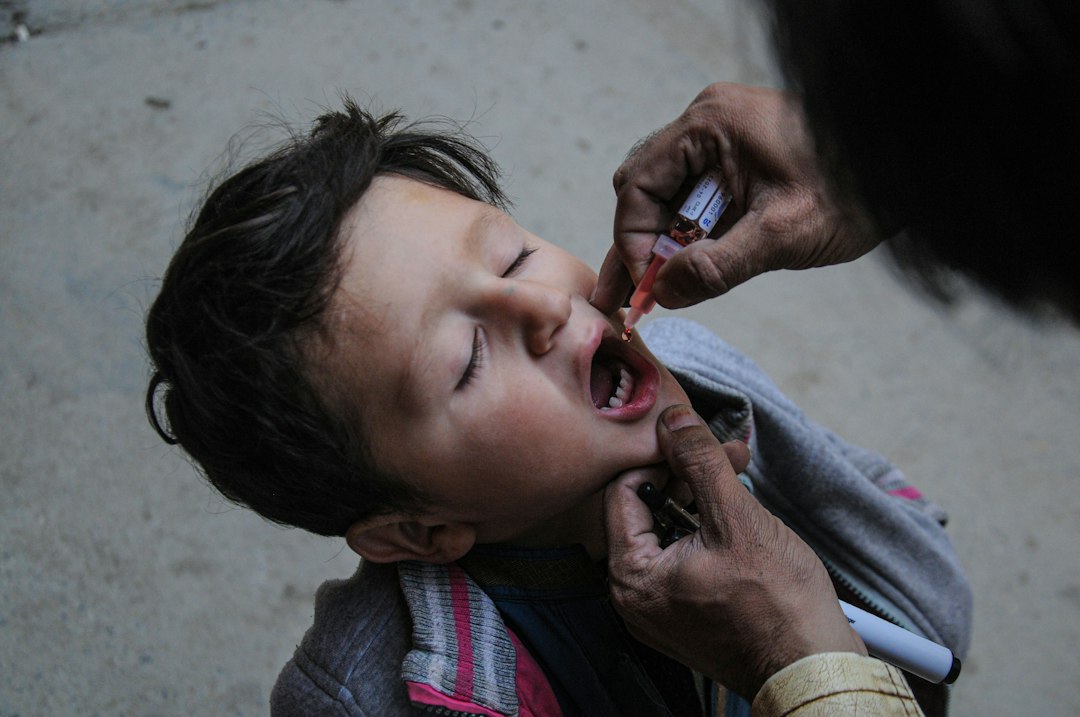
Featured image: Raja Imran Bahadr via Unsplash. Photograph from a previous polio vaccination activity in Rawalpindi, not the November 2026 campaign.
Official campaign result: Radio Pakistan — November polio campaign concludes with approximately 24 million children vaccinated.