

Pakistan’s message at the COP31 Leaders’ Summit in Antalya on 12 November was that climate-vulnerable countries need more than promises: they need timely support for adaptation and resilience that does not add to their debt burden. Prime Minister Shehbaz Sharif called for grant-based finance and stronger adaptation funding, linking the demand to the country’s experience of floods and other climate-related risks.
The statement is a negotiating position, not a funding award. COP31 is scheduled to run from 9 to 20 November 2026, and the summit’s final decisions and financial commitments are still to be determined. For Pakistan, the important question is not simply how much money is announced, but whether support is accessible, predictable and directed towards projects that reduce real risks for communities.
What grant-based climate finance means
A grant is financial support that does not have to be repaid. Pakistan’s call for grant-based climate finance reflects concern that countries facing repeated climate disasters should not have to take on additional repayment obligations simply to protect people, infrastructure and essential services from risks they did little to create.
Climate finance can support two broad kinds of action. Mitigation reduces greenhouse-gas emissions, for example through cleaner electricity and more efficient transport. Adaptation prepares communities and systems for impacts that are already occurring or are expected, such as floods, extreme heat, water stress, glacial hazards and damage to roads, schools or health facilities.
For Pakistan, adaptation is not an abstract diplomatic topic. It can mean stronger flood forecasting, safer drainage, climate-resilient water systems, heat-health planning, protection for vulnerable settlements and better information for farmers and local authorities. These investments often produce public benefits over many years rather than a direct commercial income stream, which is one reason the terms and accessibility of climate support matter.
Why Pakistan is making the case now
At COP31, the prime minister referred to the human and economic losses caused by the 2022 floods and to more recent flash-flood impacts in Khyber Pakhtunkhwa. His central argument was that the countries and communities least responsible for global emissions can face severe consequences when climate hazards intensify.
In the same address, the prime minister also warned against the weaponisation of water and said water-sharing agreements should be honoured. That remark connects climate vulnerability with Pakistan’s wider water diplomacy, but it does not change the legal status of any treaty or alter river flows by itself. Verity Pakistan explains the current legal dispute in its Indus Waters Treaty guide.
Pakistan’s own climate planning provides a policy framework for adaptation. The Ministry of Climate Change lists the National Adaptation Plan, updated national climate policy and related documents among the country’s active policy instruments. The official COP31 programme also places adaptation, climate finance, technology transfer and capacity-building among the themes of Pakistan’s participation.
That framework matters because international funding is more likely to produce useful results when it supports clearly prepared projects with responsible agencies, credible risk assessments, community participation and a plan for maintaining the infrastructure after construction.
Where adaptation support could make a practical difference
| Area | What useful support could deliver | What should be measured |
|---|---|---|
| Flood risk | Better forecasting, warning systems, drainage and safer settlement planning. | Warning lead time, people reached, evacuation readiness and reduced service disruption. |
| Water security | More resilient water supply, storage, irrigation efficiency and protection of watersheds. | Reliability of supply, water losses, service coverage and local water quality. |
| Heat and health | Heat-action plans, safer public spaces and climate-sensitive health surveillance. | Coverage of heat alerts, access to cooling and health-system readiness. |
| Mountain communities | Glacial lake outburst flood monitoring, local warning systems and safer access routes. | Monitoring coverage, warning delivery and community response capacity. |
| Climate-resilient livelihoods | Better climate information, resilient infrastructure and locally suitable adaptation practices. | Reduced losses, continuity of livelihoods and benefits reaching vulnerable households. |
These are examples of the kinds of outcomes that adaptation programmes can pursue; they are not a list of projects already funded by COP31. A credible programme should identify the location, responsible institution, expected beneficiaries, safeguards, maintenance arrangements and public reporting method before money is counted as a result.
Four tests for any climate-finance announcement
1. Is the money genuinely a grant?
Announcements should distinguish grants from other forms of support and explain whether the funds are new and additional. A headline figure can be misleading if it combines different instruments, repeats an earlier pledge or does not show the terms attached to the money.
2. Can the funding be accessed in time?
Communities cannot wait indefinitely for a project to move through complex approvals after a disaster risk has been identified. Clear application rules, technical support for preparing projects and predictable disbursement schedules are essential.
3. Does funding reach provinces and local communities?
Climate risks differ across Pakistan. Flood-prone districts, coastal communities, water-stressed areas and mountain settlements do not need identical interventions. National commitments should translate into transparent provincial and local priorities rather than remain concentrated in central announcements.
4. Are results independently visible?
Governments should publish project locations, spending progress, procurement information, safeguards and measurable outcomes. The number of projects approved is not the same as the number completed, and money disbursed is not the same as risk reduced.
Pakistan also has work to do at home
International support cannot replace domestic planning. Federal and provincial departments need reliable climate-risk data, coordinated responsibilities, prepared projects and budgets for operation and maintenance. Local authorities must be involved early enough to identify which roads, drains, water systems, clinics and settlements are most exposed.
Public accountability is especially important when a project involves land acquisition, relocation, water access or construction in environmentally sensitive areas. Communities should be able to understand what is proposed, how decisions are made and where complaints can be raised. Adaptation should reduce vulnerability rather than transfer risk to another neighbourhood or group.
Verity Pakistan has previously examined Pakistan’s satellite-based early-warning plans and the geography and governance factors behind flooding. Those subjects show why finance must be linked to data, local institutions and practical preparedness.
What to watch before COP31 closes
The summit is due to continue until 20 November. Pakistanis should look beyond the speeches and watch for written decisions, clear grant commitments, access arrangements, timelines and evidence that adaptation priorities are being translated into funded programmes. Any final package should be assessed on its terms and implementation—not simply on the size of a headline figure.
Pakistan’s request is straightforward: climate support should help protect lives and livelihoods without worsening the financial pressures faced by vulnerable countries. Whether COP31 delivers meaningful progress will depend on the details negotiated in Antalya and on the ability of institutions at home to turn commitments into protection on the ground.
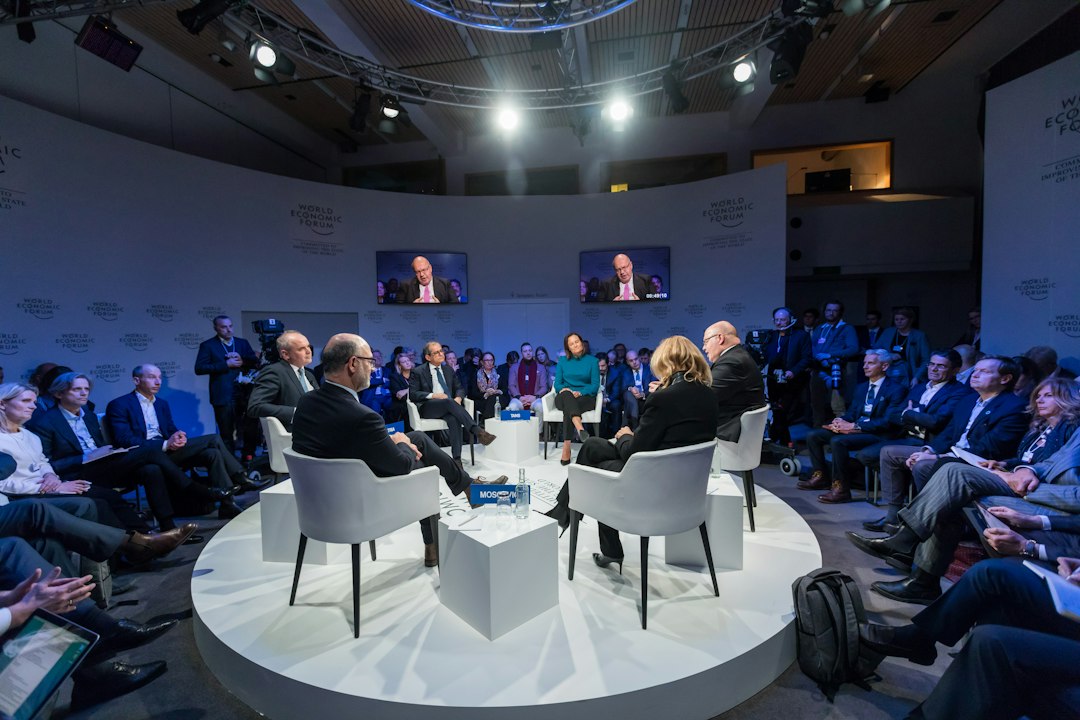
Illustrative image of a conference meeting; it does not depict COP31 or its delegates. Photo by Headway via Unsplash.
Official information: Pakistan’s Ministry of Climate Change COP31 information and programme.