

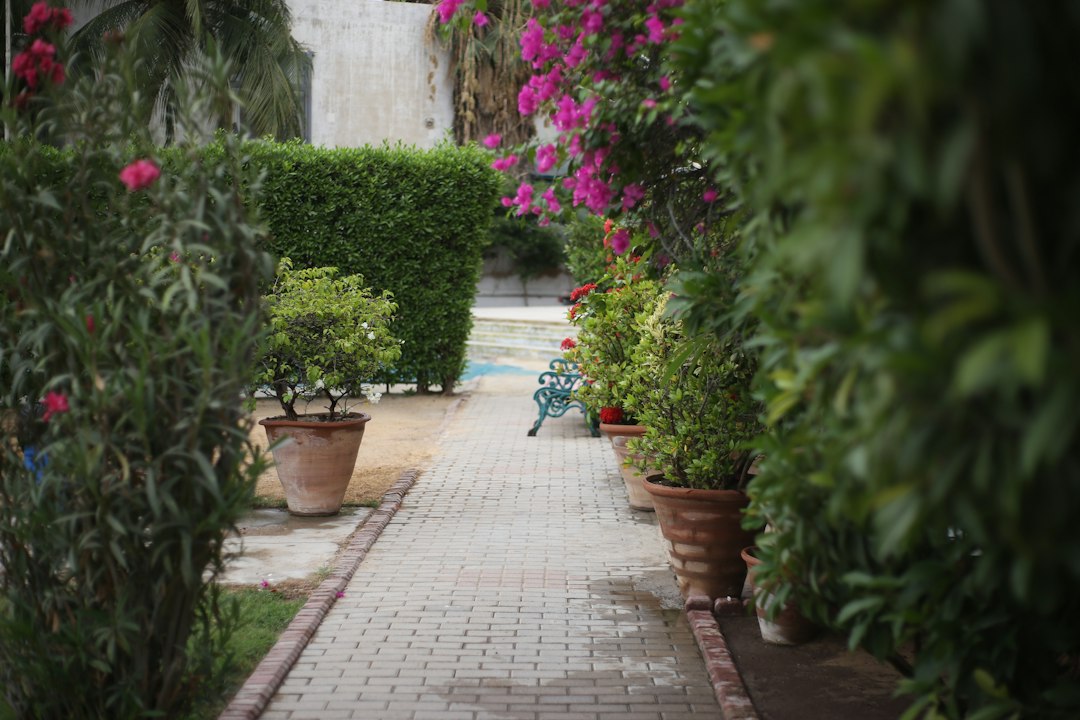
Karachi’s first experimental sponge park has opened at Jamali Park in Federal B Area, Gulberg. The one-acre site has been redesigned to capture and hold up to 100,000 gallons of rainwater during monsoon events, using rain gardens, bioswales and permeable pathways. The project offers a practical example of how a public park can help manage rainwater instead of allowing all of it to rush across paved surfaces into drains.
The idea is important for a city that faces both water scarcity and urban flooding. But the project should be understood accurately: one park cannot prevent flooding across Karachi or replace the drainage system. Its value is as a local demonstration of water-sensitive design that can be monitored and adapted elsewhere if it performs as intended.
What is a sponge park?
A conventional paved surface sends much of the rain that falls on it into drains or low-lying streets. A sponge park is designed to slow that movement. It uses planted depressions, channels and surfaces that allow water to collect temporarily and seep into the ground, while some water may be filtered and stored for later non-drinking uses.
At Jamali Park, the reported design includes three central features:
- Rain gardens: Shallow planted areas where runoff can collect temporarily. The soil and vegetation slow the water and allow some of it to infiltrate rather than flowing immediately away.
- Bioswales: Vegetated channels that guide runoff at a slower speed. Their shape and planted surfaces can trap sediment and help water move through the landscape in a controlled way.
- Permeable pathways: Walkways designed to let water pass through the surface into underlying layers, instead of behaving like sealed concrete.
The park also includes native trees, biodiversity and pollinator areas, and a community learning space. These features mean the project is not only a drainage intervention; it also aims to improve the ecological value and everyday use of a public green space.
What does 100,000 gallons actually mean?
The reported holding capacity is a project-level figure for monsoon events. It is not an annual rainfall total, a guarantee that the park will capture that amount in every storm or a measure of how much water Karachi as a whole can store. Actual performance depends on how much rain falls, how wet the soil already is, how quickly water enters the site and whether the storage and infiltration features have available capacity.
It is also important to distinguish temporary retention from permanent storage. Water held in a rain garden may gradually soak into the soil or move through a designed outlet. The same litre of water should not be counted as both stored and recharged unless the project’s monitoring method clearly separates those outcomes.
How filtration and reuse fit into the design
Reporting on the project also describes the reuse of water from a nearby mosque’s ablution facilities. That water is intended to pass through a series of filtration layers before being used for park irrigation. The materials described include gravel, sand, silica, activated carbon, biochar and zeolite. Different layers can help remove larger particles, finer suspended material and certain contaminants.
Filtration for landscaping does not make water safe to drink. The park’s reuse system should be treated as a non-potable application unless a separate treatment and testing standard demonstrates otherwise. Clear signage and maintenance procedures are important so that stored or filtered water is not mistaken for drinking water.
Why this approach is relevant to Karachi
Much of Karachi’s built environment contains roads, roofs, tiled courtyards and other hard surfaces. When intense rain falls on these areas, water can reach drains quickly, while some neighbourhoods have limited infiltration space. A park that temporarily holds runoff can reduce the amount of water reaching the drainage network at the same moment.
The same space can provide shade, vegetation and habitat. In a dense urban area, those benefits may improve the local microclimate and make public parks more useful. The project therefore links water management with urban biodiversity and public-space design.
Karachi’s climate and water challenges also feature in Pakistan’s wider adaptation debate. Verity’s explainer on Pakistan’s climate-finance priorities discusses why resilience plans need to translate into practical projects at the city and community level.
What a sponge park cannot do by itself
A one-acre park has a limited catchment and storage capacity. It cannot stop severe flooding caused by blocked drains, river or coastal surges, poor land-use planning, undersized stormwater infrastructure or rainfall that exceeds the site’s design. It should be treated as a complementary measure, not a substitute for clearing drains, protecting natural waterways, enforcing building rules or maintaining pumping and stormwater systems.
Its effectiveness will also depend on local conditions. Soil that absorbs water slowly may reduce infiltration. A high groundwater table, saline conditions or contaminated runoff can affect where and how water should be stored. Filters can clog with sediment and litter, while planted channels need maintenance to remain effective. These are engineering and operations questions that should be measured rather than assumed away.
How Karachi should judge whether the experiment works
| What to measure | Why it matters |
|---|---|
| Rainfall captured at the site | Shows how much runoff enters the park during different storms. |
| Peak water level and overflow | Reveals whether the design can handle the intended storm conditions. |
| Infiltration and storage time | Shows how quickly water moves into the ground or leaves the retention areas. |
| Water quality | Helps determine whether filtered water is suitable for its intended non-potable use. |
| Filter and channel maintenance | Shows the recurring cost and labour needed to prevent blockages. |
| Plant survival and biodiversity | Measures whether the park’s ecological features remain healthy over time. |
Publishing these measurements after monsoon events would make the project more useful to other municipalities. It would allow planners to compare the design with conventional parks, identify maintenance costs and understand which features should be adapted to different soil and drainage conditions.
Could other Karachi parks use the same model?
The concept can be considered for other parks, school grounds, public spaces and selected road corridors, but it should not be copied as a standard package without site assessment. Each location needs a survey of its catchment, soil, groundwater, existing drainage connections and expected rainfall. A design that works in one park may need different storage, planting or overflow arrangements elsewhere.
Gulberg Town has indicated that it wants to replicate nature-positive features in other parks. The next step should be to publish performance results from Jamali Park before scaling up. A transparent record of captured water, overflow, maintenance and water quality would help residents see whether the project is delivering measurable benefits.
Jamali Park is a promising local demonstration, not a complete answer to Karachi’s water and flooding problems. Its real contribution will be measured by how much water it manages safely, how reliably it is maintained and whether the lessons can be applied to other neighbourhoods without overstating what one park can achieve.