

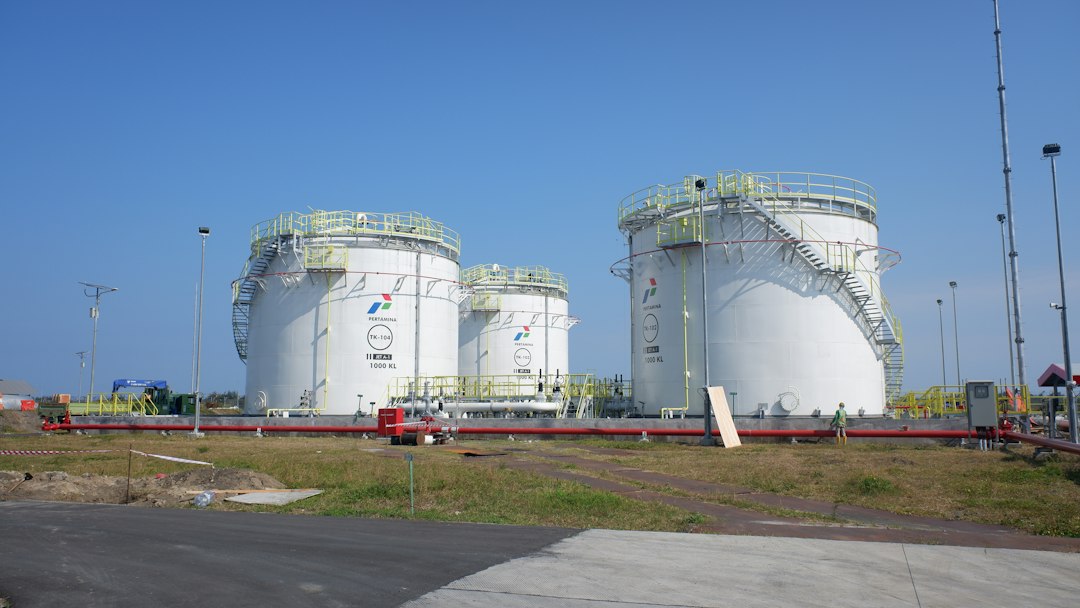
Pakistan’s proposed $25–30 billion gas infrastructure programme with Saudi Arabia’s Delta Energy Saudi has attracted attention because it could eventually connect western Pakistan with new gas supplies and a planned LNG facility at Gwadar. But the announcement needs to be read carefully: the agreement signed on 17 November is a memorandum of understanding to assess possible projects. It is not a final investment decision, a construction contract or proof that gas will begin flowing on a set date.
For households, industries, investors and communities in Balochistan, the practical question is not simply how large the headline figure looks. It is whether the proposal can secure a dependable gas source, a workable cross-border route, financing, regulatory approvals and customers willing to buy the gas at a sustainable price.
What was signed on 17 November?
Pakistan’s state-owned Inter State Gas Systems (ISGS), which operates under the Petroleum Division, and Saudi-based Delta Energy Saudi (DES), part of Delta International Group, signed an MoU under the auspices of the Special Investment Facilitation Council. The government described the proposed programme as an estimated USD 25–30 billion initiative to assess a pipeline entering Pakistan through Afghanistan near Chaman and running across Balochistan towards Gwadar, where an LNG terminal is planned. The government statement also says the infrastructure could be extended to other locations later.
The wider programme described by the companies includes possible gas pipelines, LNG facilities, gas processing and storage, and export terminals. Reuters reported that the companies said the agreement creates a framework for evaluating the projects and does not commit either side to finance or build them.
One important detail is not yet clear: where would the gas come from?
The public descriptions do not fully match. Pakistan’s official announcement describes a pipeline carrying gas from Turkmenistan through Afghanistan into Pakistan. The company information reported by Reuters, however, identifies Afghanistan’s Kashk gas concession and other Afghan resources as possible supply sources, and says the programme is separate from the Turkmenistan–Afghanistan–Pakistan–India (TAPI) project and does not depend on Turkmenistan.
That difference matters. A pipeline route and a gas-supply contract are two separate things. A pipe can cross a country without having a confirmed source of gas, and a gas field can be identified as a possible source without a binding agreement to produce and deliver its output. Until ISGS and Delta Energy publish a clearer technical and commercial description, readers should not assume that the project is simply a new version of TAPI or that Turkmen gas has already been contracted.
What route is being considered?
The government’s proposed route enters Pakistan near Chaman, crosses Balochistan and reaches Gwadar. The company’s wider description also considers a possible extension towards Pakistan’s eastern border. Reuters reported that the programme envisages a pipeline from Chaman towards the Indian border near Fazilka, a route Delta Energy described as strategically important but one that would require formal engagement and agreements with the relevant authorities in Pakistan and India.
These are proposals for assessment, not approved construction alignments. The final route would depend on engineering surveys, land access, terrain, security, environmental review, cross-border permissions and the location of the gas source and customers. The exact length, diameter, capacity, pressure, compressor requirements and construction schedule have not been confirmed in the public announcement.
Why Gwadar and Balochistan matter
Gwadar offers a coastal location for possible LNG infrastructure and connections to shipping routes. If a viable project is developed, gas processing, storage and export facilities could create demand for construction, logistics, maintenance and technical services. Balochistan communities along any final route would also face questions about land, safety, local employment, water use, environmental protection and compensation.
However, a pipeline reaching Gwadar does not automatically mean cheaper gas for households or factories. The delivered price would depend on the source gas price, transit charges, pipeline tariffs, processing costs, financing costs, currency exposure, taxes and the terms of long-term purchase agreements. No consumer tariff reduction has been announced.
How to tell a feasibility MoU from a project that is ready to build
Large infrastructure proposals move through several stages. The distinction is important because each stage answers a different question.
| Stage | What it establishes | What remains to be proved |
|---|---|---|
| MoU and project assessment | Parties agree to examine a proposal | Technical feasibility, costs and commercial viability |
| Feasibility and route studies | Possible route, supply, demand and engineering options are tested | Permits, binding supply and transit arrangements |
| Final investment decision | Investors approve a defined project and capital plan | Construction, commissioning and operating performance |
| Construction and commissioning | Infrastructure is built, tested and connected | Reliable commercial deliveries at an agreed price |
The current announcement is at the first stage. It should not be reported as a completed $30bn investment or a pipeline that is already under construction.
Six questions that should be answered next
- Supply: Which gas fields will provide the volumes, and are production rights and supply contracts secured?
- Transit: What agreements would be required with Afghanistan and any other country involved in the final route?
- Security: Who would protect the pipeline, compressor stations and workers along the route?
- Financing: Which parties would provide capital, on what terms, and who would carry construction and currency risks? No financing commitment has been announced.
- Domestic use: Will gas be sold to power plants, industry, households, an LNG facility or export customers? What capacity is actually needed?
- Public safeguards: How will land acquisition, local consultation, water use, environmental impacts and community benefits be handled?
What it could mean for Pakistan’s energy planning
Pakistan has long sought more reliable and diversified gas supplies, while several cross-border pipeline ideas have faced delays. A credible new route could widen the country’s options, but only if the supply source, transit arrangements and buyer commitments are stronger than the uncertainties that have slowed earlier proposals.
For now, the most useful way to judge progress is to watch for a published feasibility study, a confirmed source and volume of gas, a route map, cross-border agreements, environmental approvals, financing details and a final investment decision. Until those appear, the USD 25–30 billion figure should be treated as an estimate attached to a proposed programme—not money already committed or spent.
Official announcement: Government of Pakistan: ISGS–Delta Energy Saudi MoU, 17 November 2026.