

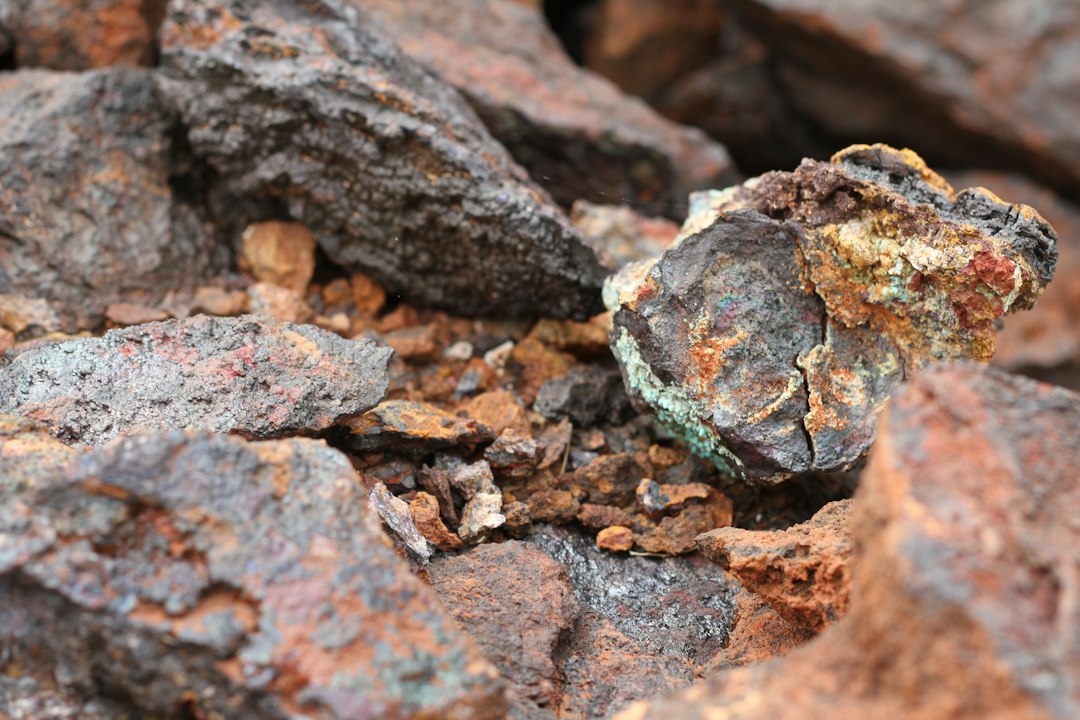
New copper-and-gold exploration results from Chagai have brought Balochistan’s mineral potential back into the national spotlight. National Resources Limited (NRL) says it has identified mineralisation across at least eight porphyry discoveries in the Darigwan area after completing nearly 25,000 metres of drilling. The company is now working towards its first formal mineral resource estimate.
The reported figures are encouraging, but they need to be read carefully. A long mineralised drill interval is evidence that a hole passed through copper- and gold-bearing rock. It is not, by itself, proof of a commercially mineable deposit, a confirmed reserve or an approved mine. Understanding that distinction is essential before treating exploration news as a future export or jobs figure.
What NRL has reported so far
The company’s announcement, presented at the Pakistan Minerals Investment Forum 2026, describes eight porphyry discoveries covering about 5.6 square kilometres in Darigwan, adjoining NRL’s earlier Tang Kaur copper-gold prospect.
One reported drill hole intersected a 295-metre interval averaging 0.43 per cent copper and 0.13 grams of gold per tonne. Within that interval, a 132-metre section was reported at a higher copper grade of 0.83 per cent. These are exploration results from a particular drill hole, not an average grade for the entire 5.6-square-kilometre area.
| Reported result | What it tells readers |
|---|---|
| Nearly 25,000 metres drilled | The scale of the exploration programme; it does not describe the size of a mineable deposit. |
| Eight porphyry discoveries | Multiple mineralised targets have been identified in the exploration area. |
| 5.6 square kilometres | The reported area covered by the Darigwan discoveries, not the footprint of an approved mine. |
| 295 metres at 0.43% copper | A reported mineralised drill interval and average copper grade for that interval. |
| 132 metres at 0.83% copper | A higher-grade section within the longer reported interval. |
| Formal resource estimate | Still being prepared; no final resource figure has been announced by NRL. |
Why a drill interval is not the same as a deposit’s true width
Exploration drilling gives geologists samples from a narrow path through the ground. The length of mineralisation measured along that path is called an intercept. It may not equal the true thickness of the mineralised body because the drill hole can cross the geological zone at an angle. Geologists need to understand the shape, orientation and continuity of the mineralised structure before estimating its true dimensions.
Grade also needs context. A copper percentage describes the proportion of copper in the sampled rock, while a gold grade expressed in grams per tonne describes the amount of gold in a tonne of material. Neither number alone tells investors how much metal can ultimately be recovered. Metallurgical testing must establish how the minerals respond to processing and what recovery rates may be technically achievable.
Mineralisation, resource and reserve are different stages
Mineralisation means that geological material containing minerals has been identified. It is an important exploration result, but the amount, continuity and economic significance may still be uncertain.
A mineral resource estimate uses geological interpretation, drilling, sampling quality, density measurements and a three-dimensional model to estimate the quantity and grade of mineralised material. A competent technical assessment must also consider whether there are reasonable prospects for eventual economic extraction. NRL says it is working towards its first formal estimate in line with international reporting standards.
A mineral reserve is a later and more demanding category. It generally represents the economically mineable part of a measured or indicated resource after technical and economic studies apply factors such as mining methods, processing, infrastructure, costs, legal approvals, environmental conditions and other practical constraints.
That is why the latest announcement should be described as an exploration discovery or mineralisation result—not as a proven reserve, a producing mine or a guaranteed source of government revenue.
What technical work still lies ahead?
Before a project can move from exploration towards a development decision, several workstreams need to be completed. Geological teams must continue drilling and modelling to understand the shape and continuity of the mineralised system. Metallurgical tests must examine how copper and gold can be separated and recovered. Hydrogeological studies assess groundwater conditions and water requirements, while geotechnical work examines rock stability and the engineering conditions for possible mine development.
Environmental and social studies are equally important. They should identify water use, waste-rock and tailings risks, biodiversity impacts, transport requirements, community concerns and the safeguards needed before any major construction decision. A feasibility study then brings technical, economic, environmental and operating information together to test whether a project can be developed responsibly and commercially.
NRL has said further exploration is needed before the size of the mineral resources can be established. The company’s current results therefore represent progress in defining targets, not the completion of the studies required for a mine decision.
Why Chagai’s wider mineral context matters
Chagai is already associated with major copper-gold projects, including Reko Diq. The new NRL discoveries are a separate exploration programme and should not be described as another Reko Diq or assumed to share its ownership, development timetable or production outlook. Different projects in the same mineral belt can have very different geology, infrastructure needs, financing requirements and security conditions.
At the Minerals Investment Forum, the government also highlighted the launch of the National Minerals Data Centre and the Geological Survey of Pakistan GeoPortal. Better geological information can help exploration teams understand what is known about an area and reduce uncertainty, but a data platform does not replace field verification, independent technical assessment or environmental review.
What could determine whether local communities benefit?
Mineral discoveries do not automatically create broad local prosperity. The eventual benefit depends on whether exploration and any future development generate skilled employment, training, local procurement, reliable public revenue and opportunities for Balochistan-based businesses. Transparent licensing and clear reporting of royalties and taxes are also important if communities are to see how public resources are being managed.
Water is a particularly important issue in an arid region. Any future project would need to disclose its water requirements, sources, recycling plans and monitoring arrangements. Waste management, rehabilitation of disturbed land, worker safety and community consultation should be assessed before a mine is approved, not treated as matters to resolve after production begins.
Security and transport infrastructure also affect whether a technically promising project can be developed. The experience of other mineral projects in Balochistan shows why investors and communities need clear, credible arrangements for worker safety, supply routes and local participation. These risks should be acknowledged without assuming that one project’s difficulties automatically determine another’s future.
For a separate case involving enforcement against illegal gold extraction in another province, see Verity Pakistan’s report on the Kohat police attack and KP’s mining crackdown. The projects and legal regimes are different, but both underline why worker security, transparent permissions and credible enforcement matter in mineral development.
What readers should watch next
- Publication of NRL’s first formal mineral resource estimate, including the reporting standard and assumptions used.
- Further drilling results that establish whether mineralisation is continuous between the reported targets.
- Metallurgical, hydrogeological, geotechnical and environmental studies.
- A transparent feasibility timetable and disclosure of the infrastructure and water requirements.
- Details of local employment, training, procurement, community consultation and environmental safeguards.
The Chagai results are a meaningful exploration development, but the next milestone is not a headline about a giant mine. It is a credible resource estimate supported by transparent technical work. Only after that can the public judge the project’s scale, economic prospects and likely contribution to Balochistan and Pakistan.
Official minerals-sector update: Pakistan Minerals Investment Forum 2026 closing report.